Friday, December 28, 2012

Free Market Capitalism and Poverty

"As has been said before, the greatest anti-poverty program is free-market capitalism, which should be protected, not manipulated and perverted, by government."  So says an Investors.com editorial published yesterday in support of the idea (advanced first by the Spectator) that 2012 was the greatest year ever.

The editorial reminds me of Rational Optimist, the fascinating 2010 book by Matt Ridley, in which he advances the belief that, for centuries, free trade and free markets have done more to advance the cause of human happiness than any top-down, government-planned program.  It's an idea I hope to explore further on this blog: what if the best way for the government to help the poor is to do less?

The editorial's commentary on the last half-century of Korean history brought to mind this amazing 2003 satellite image of the peninsula at night:


I'm sure American liberals would say they want nothing approaching the complete government planning (not to mention repression) of North Korea communism, but the image is nonetheless stark.  On balance, who could deny that free market capitalism has done more to advance the cause of the poor, even without having that express purpose, than the various 19th and 20th century movements purportedly designed to help the poor?  In fact, who could deny that such movements have, in fact, brought greater misery to the poor?  Perhaps free market capitalism has earned a place as our default position, with government programs designed to alleviate poverty having the burden of showing they can do more good than harm.

Thursday, December 27, 2012

More on Dads and Poverty

The issue of fatherlessness and poverty has gotten some new attention the last couple days, following a compelling Washington Times article on the topic.  Maybe the most interesting insight to me was that fatherlessness seems to be a problem that tracks more closely with socioeconomic status than with geography or religious affiliation/practice.  The Times quotes Vincent DiCaro, vice president of the National Fatherhood Initiative, as saying, “We have one class that thinks marriage and fatherhood is important, and another which doesn’t, and it’s causing that gap, income inequality, to get wider.”  Later in the article, Mr. DiCaro says:
“In places you’d think values are at least talked about, they are not lived out necessarily. Education and income seem to trump them. The people who might not be preaching family values, like coastal upper-class communities, those are the people who are waiting to get married.”
These comments are reminiscent of some of the details on class divide provided in Charles Murray's 2012 book, Coming Apart.  The relatively well-off seem to have figured out that, religion and morality aside, having children within marriage tends to produce prosperity (or at least stave off poverty).  The poor seem stuck in a rut of fatherlessness, which contributes to poverty and indeed reinforces it - by failing to inculcate the "best practices" of marriage and family in the next generation.


Also in this article is some perhaps inadvertently conservative sentiment from a single mother interviewed from the story:
“We need more fatherhood initiatives,” she said, pointing to government- and nonprofit-funded programs at churches, prisons and community centers, such as those offered by Mr. DiCaro’s group, “so they can see what they’re missing.”

Just then, her daughter Nadya picked up a tree branch and strummed it like a guitar, jumping up and down, all smiles. Ms. Hawkins reconsidered her thoughts on government programs.

“Though to me, that’s the initiative right there,” she said. “You can talk till you’re blue in the face about how to do it, but ultimately, you just have to do it.”
"Just doing it" is easier said than done, of course, but perhaps her skepticism on the effectiveness of government programs (equated with "talking till you're blue in the face") is worth considering.  I think the political right and left might agree that a cultural shift is more likely to produce results in this area than any government initiative.  Getting some momentum behind such a cultural shift, without any government mandate, is undoubtedly a tough nut to crack.

Along those lines, the Times article quotes Mr. DiCaro as echoing Jonah Goldberg's sentiment from an earlier post in this blog, to the effect that President Obama could play a huge role in advancing the cause of responsible fatherhood, given his position as "a married African-American father who can probably make a huge difference with words alone."

The Daily Mail seemed to pick up on the Times article, and provides some additional census data and related information here.  Ben Shapiro comments directly on the Times article over at Breitbart.

Tuesday, December 11, 2012

Taxes and Loving the Poor

I'd venture to say that no one who happens upon this blog is unaware of the "fiscal cliff" debate that stumbles on in Washington, D.C.  Republicans are accused of wanting to keep taxes low to help the rich, at the expense of the poor and middle class.  Democrats are accused of reducing the opportunity for economic growth for all (by raising taxes) and sentencing our children to a future of crippling debt and a diminished safety net (by continuing to spend at record rates).

We often get caught up in the battle between these two men, choosing sides or demanding compromise:


Fair enough.  Government policy matters on multiple levels.  But does that distract us from our personal obligations to the poor?

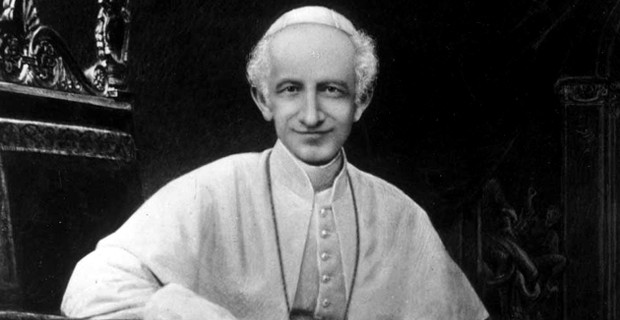
Anthony Esolen, a professor at Providence College, does a great job of laying out Pope Leo XIII's views on the state, taxation, and our personal obligations to the poor in a recent article in Crisis Magazine:
.... But love is also our duty, so the Church “lays the rich under strict command to give of their superfluity to the poor, impressing them with fear of the divine judgment which will exact the penalty of eternal punishment unless they succor the wants of the needy.”

May that be done by confiscatory taxes?  Not even by modest taxes.  The obligation is personal.  I am not saying, nor is Leo saying, that taxes may never be levied for the alleviation of need.  But such taxation is neither necessary nor sufficient.  And here we touch upon the great error of the modern state, which Leo sees quite clearly.  It is that “governments have been organized without God and the order established by Him being taken at all into account,” something even the pagans never did.  The Church has been forced to withdraw from “the scheme of studies at universities, colleges, and high schools, as well as from all the practical working of public life.”  That severs our public life from the life to come, and removes at a stroke the profound and personal obligations, God-given along with our rights, which the rich and poor owe to one another.  A Scrooge can thus say that he “gives” to the poor because he is taxed to support poorhouses and orphanages; and our modern statists can say that because they tax others to support a wholly dysfunctional way of life, they therefore have given to the poor.
(Emphasis mine.)

Who can doubt that many libertarians and conservatives are tempted to say that they already do more than enough "giving" by paying more taxes than they think they should have to in the first place?  Or that many liberals feel satisfied by not only paying all their taxes, but supporting the assessment of even more?

Leo is right on target, I think.  Conservative, liberal, or somewhere in between, what Christian can doubt that the modern Western welfare state has drawn us away from our personal obligations, or at least tempted us to do so?

In the midst of Obama vs. Boehner (Round 2 of ??), let's not forget Leo.

Monday, December 10, 2012

A Liberal on Poverty

Kudos to liberal New York Times columnist Nicholas Kristof for a candid column on poverty, and particularly the relationship between traditional safety net programs and "soul-crushing dependency":

This is painful for a liberal to admit, but conservatives have a point when they suggest that America’s safety net can sometimes entangle people in a soul-crushing dependency. Our poverty programs do rescue many people, but other times they backfire.

Some young people here don’t join the military (a traditional escape route for poor, rural Americans) because it’s easier to rely on food stamps and disability payments.


He also touches on the subject of my last post, single-parent families and poverty:
Antipoverty programs also discourage marriage: In a means-tested program like S.S.I., a woman raising a child may receive a bigger check if she refrains from marrying that hard-working guy she likes. Yet marriage is one of the best forces to blunt poverty. In married couple households only one child in 10 grows up in poverty, while almost half do in single-mother households.
At the end of the column, Kristof reflects on how little attention poverty gets in our politics, including the recent presidential election campaign.  (He narrowly avoided receiving extra credit for mentioning Paul Ryan's reported desire to campaign on the issue, only to be denied the chance by Romney campaign managers.  Ryan returned to the issue in a joint event with Marco Rubio last week.)

Michael Barone and Charles Murray responded thoughtfully to Kristof's column from the right.  Murray's "three laws of social programs" - imperfect selection, unintended rewards, and net harm - are particularly interesting, and probably deserve additional attention in this blog (in the sense that I should spend additional time thinking about them, and not in the sense that Murray needs my attention).

To me, these columns, plus Ryan's recent observations, nicely summarize the weaknesses that conservatives see in the traditional "war on poverty."  I'd venture to say most Americans, even most liberals, would concede these weaknesses in their most candid moments.  But I also think most Americans instinctively ask, if not our traditional approach, then what?  Throw up our hands and ignore the poor?  Giving up is understandably objectionable, and it shouldn't have to stifle innovation in our approach to poverty.

Conservatives have the job of explaining (a) why goverment has no legitimate role in fighting poverty, (b) why government cannot play an effective role in fighting poverty, or (c) if government has a legitimate, effective role to play, what it is.  I'd like to explore the last option.

Tuesday, November 27, 2012

Poverty and Fatherlessness

Does anyone dispute that a major driver of poverty is fatherlessness?  It seems clearly to contribute to poverty in childhood for those lacking a father and to make emergence from poverty less likely when those children turn into adults.  (See here, here, here, and here for a start on the evidence.)  And does anyone dispute that the prevalence of fatherlessness continues to grow?  Unless there's some factual dispute about the extent and effect of fatherlessness of which I'm not aware, this seems like it should be a huge issue for anyone concerned about poverty.  Yet it is virtually ignored by liberalism and the traditional "war on poverty."  In fact, some would argue that the growing welfare state, far from addressing the problem, has exacerbated it.

Jonah Goldberg resurfaces the issue in a recent column and urges President Obama to challenge young men - especially young black men - to do something about this problem.  At the very least, given his unique standing as (a) president, (b) a Democrat, (c) a black man, and (d) seemingly a devoted father, he could legitimize and depoliticize a national discussion of the issue.  This seems like common sense to me.

Tuesday, November 13, 2012

Paul Ryan on Poverty

The media caricature of Paul Ryan is of a heartless Ayn Rand disciple, looking to balance the budget on the backs of the poor.  Whether the famed "Ryan Budget" is sufficiently compassionate and whether its projections are sound are matters for another day.  What I'd like to point out is that he apparently fought hard to make poverty and income mobility significant issues in the 2012 Romney-Ryan campaign, finally convincing the Romney people to let him do so in a speech at Cleveland State University on October 24.

Ryan's speech is approvingly summarized by David Azerrad in a post on the Heritage Foundations's Foundry blog.  As Azerrad notes, Ryan did not deny the enormous problems posed by poverty and the enormous obstacles that poor people face.  Instead, he laid out his aspiration that the American Dream be accessible to all children, no matter their backgrounds, and attempted to explain how conservative, smaller government makes that goal more achievable than the big government solutions that have failed us for 50 years. 
  • Ryan on the big government approach: “With a few exceptions, government’s approach has been to spend lots of money on centralized, bureaucratic, top-down anti-poverty programs. The mindset behind this approach is that a nation should measure compassion by the size of the federal government and how much it spends." 
  • Ryan on his own approach: "Well, to hear some tell it, we think everybody should just fend for themselves. But that’s just a false argument—a straw man set up to avoid genuine debate.… I believe in true compassion and upward mobility.”
  • He also made some interesting observations about civil society as a partial substitute for government.  Look for more blog posts on that theme in this space in the future.
The full text is here.  Video below:

Samuel Gregg, posting on National Review Online, was a fan, but the speech didn't win a lot of converts on the left.  In my view, those on the left refuse to engage the foundations of Ryan's arguments.  They assume that advocating smaller government programs is automatically heartless, and they focus on income inequality (and failure to redistribute) rather than socioeconomic mobility.  Of course Paul Ryan is heartless if the measure of heart is belief in big government programs.  But what if he's right that the war of poverty is already a proven failure?  Doesn't that require some reexamination of the traditional "war on poverty"?  At the very least, shouldn't his arguments be addressed rather than skirted?

About this blog and me

This blog

This blog is intended to promote discussion and understanding of a topic I believe to be widely neglected and often misunderstood - the perspective of the American conservative movement on what to do about poverty and the poor.  I think it is fair to say that Americans of all political stripes commonly believe that liberals have a far-reaching agenda with respect to poverty, while conservatives have almost no "agenda" in this area.  I think this understates the conservative perspective. 

Some conservatives have a real interest in poverty, but believe simply that free markets and individual liberty (a) best promote economic and social mobility, and (b) present the least risk of the entitlement and dependency culture created by liberals' "war on poverty."  Since free markets and individual liberty already represent the mainstream conservative policy-making wish list, no additional program for the poor is needed.  Other conservatives, perhaps most famously Jack Kemp, call for a more active approach to addressing poverty, one that would use governmental powers to promote economic activity and advancement in poor areas.  More libertarian conservatives probably have no real interest in poverty, at least to the extent it is argued to lay claim to certain government policy initiatives.  (These "conservatives" - and the purest libertarians would object to that label - probably earn the reputation for indifference to poverty, at least from a public policy perspective.)

One of the motivations for this blog is to explore these perspectives and hopefully others coming from the right.  I will not spend much space exploring the liberal approach to poverty, on the assumption that it's already getting lots of exposure in the media, the academy, and elsewhere.  I will do my best to include some liberal counterarguments to the conservative perspectives I post here.

Your Humble Blogger
I'm posting anonymously, so that I can also post frankly, without concern for the impact my views might have on my career, my friendships, and even my family relationships.  I really don't think any of my views should offend anyone.  But poverty is a sensitive topic, and it often touches on race, which is even more sensitive.  I'll revisit my preference for anonymity occasionally, but for now, it seems the way to go.

Having said that, anyone reading this may be entitled to an understanding of who's writing.  So, let me deliver some background on my perspective here:
  • I'm a lifelong conservative who has historically leaned to the libertarian end of the conservative movement.
  • I'm also a lifelong Roman Catholic who has taken more and more of an interest in the Church's teachings on poverty and social justice as I've grown older.
  • I'm in my mid-30s and have practiced law (mostly labor and employment law) in the Philadelphia area for over 10 years.
  • I'm married with three kids.
  • While I've come to reconsider my libertarian bent as I've gotten older and now think the government has an obligation to address the needs of its most vulnerable citizens (including the poor), I continue to believe that the liberal "war on poverty" has been a complete disaster for the poor.  I have a passion for history and frequently look at public policy with an eye on history, rather than theory.  In my view, the liberal program has a clear record of reducing economic and social mobility; creating a culture of dependence, entitlement, and victimization; and bringing our country to the brink of insolvency.  I'd rather not double down on a failing approach.
  • I believe that a smart approach to the problem of poverty must be judged prospectively by its likely results (again, using history as a guide) and retrospectively by its actual results, not by its motives.  A program that improves the plight of the poor accidentally is better than a well-intentioned program that helps no one.
  • I'm not particularly interested in income inequality.  A program that improves the plight of the poor by 50% but increases income inequality is better than one that improves their plight by 10% but reduces income inequality.
  • I believe that a morally sound approach to the problem of poverty must have the purpose of getting people out of poverty, not creating a permanent voting bloc.  While this is not a failing in my many liberal friends, I do think it's a huge failing in the politicians for whom they vote.
  • I believe that, regardless of government policy, each individual has a moral obligation to help the poor.  How that obligation plays into voting and advocacy is a thornier issue that I'd like to explore here.
To the extent I think of anything else that might be worth including in this introductory post, I'll edit it from time to time as I go along.  I look forward to your feedback on the blog and anything I can do to improve it.