Friday, December 28, 2012

Free Market Capitalism and Poverty

"As has been said before, the greatest anti-poverty program is free-market capitalism, which should be protected, not manipulated and perverted, by government."  So says an Investors.com editorial published yesterday in support of the idea (advanced first by the Spectator) that 2012 was the greatest year ever.

The editorial reminds me of Rational Optimist, the fascinating 2010 book by Matt Ridley, in which he advances the belief that, for centuries, free trade and free markets have done more to advance the cause of human happiness than any top-down, government-planned program.  It's an idea I hope to explore further on this blog: what if the best way for the government to help the poor is to do less?

The editorial's commentary on the last half-century of Korean history brought to mind this amazing 2003 satellite image of the peninsula at night:


I'm sure American liberals would say they want nothing approaching the complete government planning (not to mention repression) of North Korea communism, but the image is nonetheless stark.  On balance, who could deny that free market capitalism has done more to advance the cause of the poor, even without having that express purpose, than the various 19th and 20th century movements purportedly designed to help the poor?  In fact, who could deny that such movements have, in fact, brought greater misery to the poor?  Perhaps free market capitalism has earned a place as our default position, with government programs designed to alleviate poverty having the burden of showing they can do more good than harm.

Thursday, December 27, 2012

More on Dads and Poverty

The issue of fatherlessness and poverty has gotten some new attention the last couple days, following a compelling Washington Times article on the topic.  Maybe the most interesting insight to me was that fatherlessness seems to be a problem that tracks more closely with socioeconomic status than with geography or religious affiliation/practice.  The Times quotes Vincent DiCaro, vice president of the National Fatherhood Initiative, as saying, “We have one class that thinks marriage and fatherhood is important, and another which doesn’t, and it’s causing that gap, income inequality, to get wider.”  Later in the article, Mr. DiCaro says:
“In places you’d think values are at least talked about, they are not lived out necessarily. Education and income seem to trump them. The people who might not be preaching family values, like coastal upper-class communities, those are the people who are waiting to get married.”
These comments are reminiscent of some of the details on class divide provided in Charles Murray's 2012 book, Coming Apart.  The relatively well-off seem to have figured out that, religion and morality aside, having children within marriage tends to produce prosperity (or at least stave off poverty).  The poor seem stuck in a rut of fatherlessness, which contributes to poverty and indeed reinforces it - by failing to inculcate the "best practices" of marriage and family in the next generation.


Also in this article is some perhaps inadvertently conservative sentiment from a single mother interviewed from the story:
“We need more fatherhood initiatives,” she said, pointing to government- and nonprofit-funded programs at churches, prisons and community centers, such as those offered by Mr. DiCaro’s group, “so they can see what they’re missing.”

Just then, her daughter Nadya picked up a tree branch and strummed it like a guitar, jumping up and down, all smiles. Ms. Hawkins reconsidered her thoughts on government programs.

“Though to me, that’s the initiative right there,” she said. “You can talk till you’re blue in the face about how to do it, but ultimately, you just have to do it.”
"Just doing it" is easier said than done, of course, but perhaps her skepticism on the effectiveness of government programs (equated with "talking till you're blue in the face") is worth considering.  I think the political right and left might agree that a cultural shift is more likely to produce results in this area than any government initiative.  Getting some momentum behind such a cultural shift, without any government mandate, is undoubtedly a tough nut to crack.

Along those lines, the Times article quotes Mr. DiCaro as echoing Jonah Goldberg's sentiment from an earlier post in this blog, to the effect that President Obama could play a huge role in advancing the cause of responsible fatherhood, given his position as "a married African-American father who can probably make a huge difference with words alone."

The Daily Mail seemed to pick up on the Times article, and provides some additional census data and related information here.  Ben Shapiro comments directly on the Times article over at Breitbart.

Tuesday, December 11, 2012

Taxes and Loving the Poor

I'd venture to say that no one who happens upon this blog is unaware of the "fiscal cliff" debate that stumbles on in Washington, D.C.  Republicans are accused of wanting to keep taxes low to help the rich, at the expense of the poor and middle class.  Democrats are accused of reducing the opportunity for economic growth for all (by raising taxes) and sentencing our children to a future of crippling debt and a diminished safety net (by continuing to spend at record rates).

We often get caught up in the battle between these two men, choosing sides or demanding compromise:


Fair enough.  Government policy matters on multiple levels.  But does that distract us from our personal obligations to the poor?

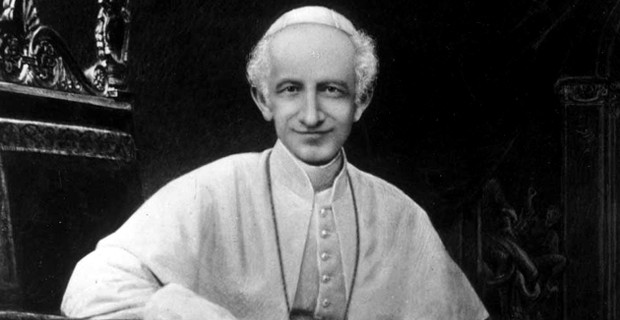
Anthony Esolen, a professor at Providence College, does a great job of laying out Pope Leo XIII's views on the state, taxation, and our personal obligations to the poor in a recent article in Crisis Magazine:
.... But love is also our duty, so the Church “lays the rich under strict command to give of their superfluity to the poor, impressing them with fear of the divine judgment which will exact the penalty of eternal punishment unless they succor the wants of the needy.”

May that be done by confiscatory taxes?  Not even by modest taxes.  The obligation is personal.  I am not saying, nor is Leo saying, that taxes may never be levied for the alleviation of need.  But such taxation is neither necessary nor sufficient.  And here we touch upon the great error of the modern state, which Leo sees quite clearly.  It is that “governments have been organized without God and the order established by Him being taken at all into account,” something even the pagans never did.  The Church has been forced to withdraw from “the scheme of studies at universities, colleges, and high schools, as well as from all the practical working of public life.”  That severs our public life from the life to come, and removes at a stroke the profound and personal obligations, God-given along with our rights, which the rich and poor owe to one another.  A Scrooge can thus say that he “gives” to the poor because he is taxed to support poorhouses and orphanages; and our modern statists can say that because they tax others to support a wholly dysfunctional way of life, they therefore have given to the poor.
(Emphasis mine.)

Who can doubt that many libertarians and conservatives are tempted to say that they already do more than enough "giving" by paying more taxes than they think they should have to in the first place?  Or that many liberals feel satisfied by not only paying all their taxes, but supporting the assessment of even more?

Leo is right on target, I think.  Conservative, liberal, or somewhere in between, what Christian can doubt that the modern Western welfare state has drawn us away from our personal obligations, or at least tempted us to do so?

In the midst of Obama vs. Boehner (Round 2 of ??), let's not forget Leo.

Monday, December 10, 2012

A Liberal on Poverty

Kudos to liberal New York Times columnist Nicholas Kristof for a candid column on poverty, and particularly the relationship between traditional safety net programs and "soul-crushing dependency":

This is painful for a liberal to admit, but conservatives have a point when they suggest that America’s safety net can sometimes entangle people in a soul-crushing dependency. Our poverty programs do rescue many people, but other times they backfire.

Some young people here don’t join the military (a traditional escape route for poor, rural Americans) because it’s easier to rely on food stamps and disability payments.


He also touches on the subject of my last post, single-parent families and poverty:
Antipoverty programs also discourage marriage: In a means-tested program like S.S.I., a woman raising a child may receive a bigger check if she refrains from marrying that hard-working guy she likes. Yet marriage is one of the best forces to blunt poverty. In married couple households only one child in 10 grows up in poverty, while almost half do in single-mother households.
At the end of the column, Kristof reflects on how little attention poverty gets in our politics, including the recent presidential election campaign.  (He narrowly avoided receiving extra credit for mentioning Paul Ryan's reported desire to campaign on the issue, only to be denied the chance by Romney campaign managers.  Ryan returned to the issue in a joint event with Marco Rubio last week.)

Michael Barone and Charles Murray responded thoughtfully to Kristof's column from the right.  Murray's "three laws of social programs" - imperfect selection, unintended rewards, and net harm - are particularly interesting, and probably deserve additional attention in this blog (in the sense that I should spend additional time thinking about them, and not in the sense that Murray needs my attention).

To me, these columns, plus Ryan's recent observations, nicely summarize the weaknesses that conservatives see in the traditional "war on poverty."  I'd venture to say most Americans, even most liberals, would concede these weaknesses in their most candid moments.  But I also think most Americans instinctively ask, if not our traditional approach, then what?  Throw up our hands and ignore the poor?  Giving up is understandably objectionable, and it shouldn't have to stifle innovation in our approach to poverty.

Conservatives have the job of explaining (a) why goverment has no legitimate role in fighting poverty, (b) why government cannot play an effective role in fighting poverty, or (c) if government has a legitimate, effective role to play, what it is.  I'd like to explore the last option.